

Drafty doors and windows can make a home feel uncomfortable even when the heating or cooling system is working hard. Cold air slipping under a door, warm air leaking around a sash, or a gap hidden behind trim can all affect comfort from room to room. The good news is that many draft problems can be improved with targeted sealing strategies. The key is matching the right material to the right type of gap.
Start By Finding Where Air Is Moving
Before sealing anything, identify where the drafts are actually coming from. Some leaks are easy to feel with your hand on a cold or windy day, especially along door bottoms, window sashes, and trim edges. Others are less obvious. Look for daylight under exterior doors, rattling window sashes, cracked caulk, damaged weatherstripping, and dust trails near gaps. A simple tissue or incense test can also help show where air is moving.
It is also worth remembering that doors and windows may not be the only problem. Air leaks in attics, basements, crawl spaces, recessed lighting, plumbing penetrations, and electrical openings can make windows and doors feel colder by pulling outdoor air through the home. If the house has widespread comfort problems, sealing only the most noticeable draft may help, but it may not fix the larger air-leak pattern.
Strategy 1: Replace Worn Weatherstripping
Weatherstripping is one of the most direct fixes for drafts around movable parts of doors and windows. It is designed to compress when the door or sash closes, helping block air without permanently sealing the opening shut. Common forms include adhesive foam tape, V-strip, tubular rubber, silicone, felt, and metal weatherstripping. The best choice depends on the location, how often the door or window moves, and how much friction the material will face.
For doors, inspect the top and sides of the frame, not just the bottom. If the existing strip is flattened, cracked, missing, or no longer makes contact, replacement may make a noticeable difference. For windows, weatherstripping works best where two movable parts meet or where a sash closes against the frame. Clean the surface first, measure carefully, and test that the window or door still closes securely after installation.
Pros:
- Works well for movable doors and operable windows.
- Can improve comfort without permanently sealing the opening.
- Available in several materials for different gap sizes and wear levels.
Cons:
- Adhesive-backed versions may loosen on dirty, damp, or uneven surfaces.
- Thick material can make a door or window hard to close.
- It may need replacement over time as it compresses or wears out.
Strategy 2: Add Or Replace Door Sweeps
A door sweep seals the gap between the bottom of an exterior door and the threshold. This is one of the most common places to feel drafts, especially at older entry doors, basement doors, garage access doors, and doors that have settled over time. Sweeps come in different styles, including screw-on metal strips with rubber fins, adhesive sweeps, brush sweeps, and adjustable bottom seals.
The right sweep should touch the threshold enough to block air without scraping so hard that the door becomes difficult to use. If the threshold itself is damaged, uneven, or too low, a sweep alone may not solve the problem. In that case, the threshold may need adjustment or replacement. After installation, check the corners carefully because small gaps near the jamb can still let air through.
Pros:
- Targets one of the most noticeable door-draft locations.
- Can also help reduce dust, insects, and light entering under the door.
- Many styles can be installed without replacing the entire door.
Cons:
- Poorly fitted sweeps can drag, peel, or make the door hard to open.
- They may not work well if the threshold is warped or damaged.
- Some styles are less durable in high-traffic entryways.
Strategy 3: Caulk Stationary Gaps Around Trim And Frames
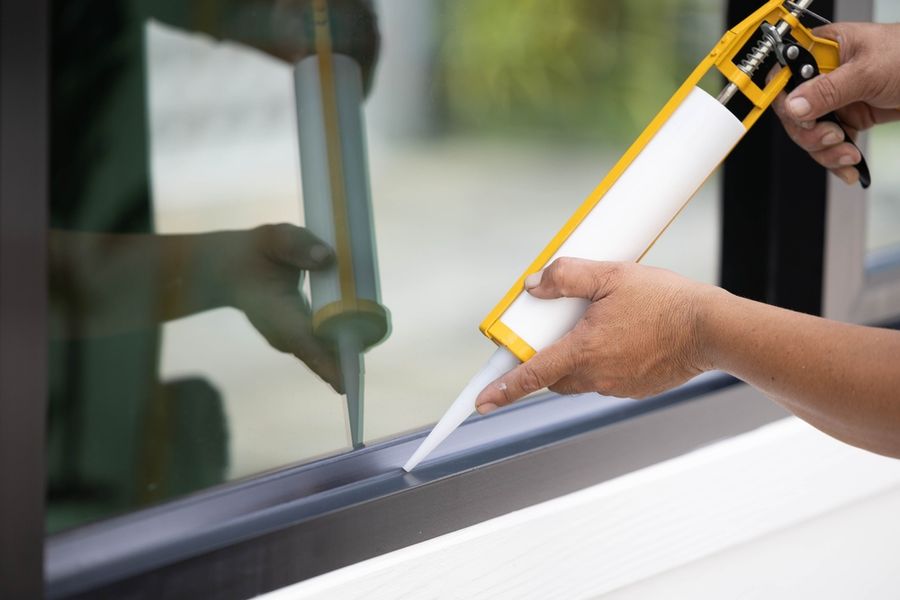
Caulk is the better tool for stationary gaps, such as cracks around window trim, door casing, sill edges, exterior frame joints, and small openings where different materials meet. Unlike weatherstripping, caulk is not meant for moving parts. Its job is to close cracks that should not open and close during normal use. A quality caulk bead can help block air and moisture when applied to a clean, dry, stable surface.
Before applying new caulk, remove loose or failing old material. Do not simply smear new caulk over cracked, dirty, or peeling caulk and expect it to last. Use paintable caulk for interior trim that will be painted and exterior-rated caulk for outdoor joints exposed to weather. For larger or deeper gaps, backer rod may be needed before caulking so the sealant can bridge the opening properly without sinking into the cavity.
Pros:
- Useful for small cracks around fixed trim, frames, and siding joints.
- Can create a clean finished look when tooled properly.
- Helps with both air leakage and moisture resistance when used in the right location.
Cons:
- Not suitable for moving joints, window tracks, or operable sashes.
- Poor surface preparation can lead to peeling or cracking.
- Large gaps may need backer rod or another material before caulk.
Strategy 4: Use Window Insulation Film For Seasonal Draft Control
Window insulation film can be a practical temporary option for older windows that feel cold or drafty during winter. These kits usually use clear plastic film applied to interior trim with tape, then tightened with gentle heat. The film creates a sealed air space that can reduce drafts and make the room feel more comfortable. It is especially useful for windows that are rarely opened during the heating season.
This is not the same as repairing a window, replacing weatherstripping, or fixing failed exterior caulk. It is a seasonal layer that can make an uncomfortable window more manageable until a more permanent improvement is possible. It works best when the trim is clean, smooth, and dry. If the window has serious condensation, water damage, or rotten framing, those issues should be addressed rather than hidden behind film.
Pros:
- Helpful for older or rarely opened windows during cold months.
- Can reduce the feeling of drafts without altering the window permanently.
- Useful as a short-term solution for renters or budget-conscious homeowners.
Cons:
- It usually must be removed before regularly opening the window.
- Tape can fail on dusty, textured, or damp trim.
- It does not repair damaged windows, failing seals, or exterior leaks.
Strategy 5: Seal Larger Hidden Gaps With Low-Expansion Foam
Some drafts come from gaps behind trim or around rough openings where the window or door unit meets the wall framing. These gaps may not be visible until trim is removed or inspected closely. Low-expansion foam made for windows and doors can help seal these cavities without applying excessive pressure to the frame. Standard expanding foam can be too aggressive in these locations and may interfere with operation if used carelessly.
This strategy is best for homeowners who are comfortable with careful prep work or for professionals handling a larger air-sealing project. Foam should be applied in controlled amounts, allowed to cure, trimmed if needed, and covered with trim or finish material. It should not be used as a sloppy surface patch. If water intrusion, rot, or structural movement is present, the underlying problem should be fixed before sealing the gap.
Pros:
- Useful for hidden gaps around rough window and door openings.
- Can reduce drafts that caulk and weatherstripping do not reach.
- Low-expansion formulas are designed to be safer around frames than standard foam.
Cons:
- Overapplication can create mess or interfere with window and door operation.
- It may require removing trim to do the job properly.
- It should not be used to conceal water damage or structural problems.
Strategy 6: Add Storm Doors Or Storm Windows
Storm doors and storm windows can add another protective layer between the indoors and outdoors. They may help reduce drafts, protect the primary door or window from weather, and improve comfort in homes with older units. A storm door can be especially useful at a frequently used entry where the main door is still solid but drafty around the edges. Storm windows can help older single-pane windows feel less exposed.
This option is more involved than applying caulk or weatherstripping, so it should be chosen carefully. The existing door or window must be in good enough condition to justify the upgrade. Ventilation, egress, hardware clearance, and appearance also matter. In some cases, repairing existing seals may be enough. In others, a storm layer can be a sensible middle step before full replacement.
Pros:
- Adds a secondary barrier against wind and weather.
- Can protect older doors and windows from direct exposure.
- May improve comfort without replacing the primary unit.
Cons:
- More involved than basic sealing tasks.
- Not every doorway or window is a good candidate.
- Poor installation can create fit, drainage, or condensation issues.
Seal The Right Gaps With The Right Fix
The best draft-sealing strategy is not one product used everywhere. Weatherstripping belongs on movable parts. Caulk belongs on stationary cracks. Door sweeps belong at door bottoms. Low-expansion foam belongs in deeper hidden gaps when used carefully. Window film can help seasonally, while storm doors, storm windows, and professional assessments can make sense when the problem is larger or more persistent.
Start with the areas you can see and feel, then move methodically. A tight home should still be a healthy home, so pay attention to ventilation, moisture, and combustion safety if you are sealing many leaks at once. When each gap gets the right solution, doors and windows can feel less drafty, rooms can feel more consistent, and the home can become easier to keep comfortable.
We created this article in conjunction with AI technology, then made sure it was fact-checked and edited by an TheInsiderScoop editor.